


FerSol®: a year of collaboration and development
Over the past year, FerSol® has been marked by growth and collaboration. The partnership between Vivochem and Ferr-Tech has intensified, applications have been further developed and an increasing number of customers have started working with FerSol®. At the same time, the market is changing rapidly, driven by stricter regulations and growing attention to water quality and the environment.
We spoke with William about the key developments of the past year and what is on the agenda for the first quarter of 2026.
Looking back on the past year with FerSol®, what stands out most to you?
We have achieved strong results in the field of heavy metals. We have, for example, started a project at Chemelot and taken steps within the galvanising and surface treatment industry. Across different applications and with various customers, we see that FerSol® performs well. That builds confidence and provides a positive outlook for the year ahead.
How has the market developed for FerSol® over the past year, in your view?
In Belgium, clear trends are visible, such as reducing chlorides, cobalt and phosphates. That is very much a current topic there. On a more international level, we mainly see the impact of the European Water Framework Directive towards 2027. We are receiving more and more questions from wastewater and water treatment applications about removing challenging substances such as metals, heavy metals like vanadium and phosphates from water. In that area, we are becoming increasingly successful.
In addition, we notice that industries are increasingly looking for chlorine-free products. Not only for operator safety, but also because of the impact on surface water and on equipment such as crate washers. Halogen-containing chemistry remains a point of attention, and FerSol® fits well within this development as it contains no halogens.
What were the main questions or challenges customers had regarding FerSol®?
Reducing chlorides was a clear common theme throughout the year. We attended Aquarama in Belgium for the first time last year and made many valuable contacts there. We are currently in discussions with several multinationals about how we can support them in lowering chloride levels. These are valuable conversations and the follow-up is progressing well.
Can you mention a moment or collaboration you are particularly proud of?
Two projects stand out. We are working closely with a galvanising company to validate a completely new process. Once this is completed early next year, we will move towards launching it.
In addition, alongside supplying crate washing operations, we have started applications in IBC cleaning. Working with a major player in that sector, we have gained increasing control over the process and are seeing good results.
Collaboration between Vivochem and Ferr-Tech
How would you describe the collaboration between Vivochem and Ferr-Tech over the past year?
It has clearly become more intensive and more effective. There is more alignment, more training and more structure. Ferr-Tech is growing from a start-up into a scale-up, and processes are becoming increasingly professional.
In marketing, we work very closely together, both online and offline. Developing campaigns, preparing trade fairs and rolling out actions together has delivered visible results. The cooperation between sales and R&D has also strengthened, with the teams increasingly operating as one. That works well.

FerSol® requires specific attention in production, transport and storage. How do Vivochem and Ferr-Tech complement each other in this?
Important steps have been taken over the past year. We developed a new line of MCDs, Mix Condition Dose systems. These allow FerSol®, whether supplied in jerrycans or IBCs, to be fully conditioned at around ten degrees. Both small and large systems have been set up for different partners.
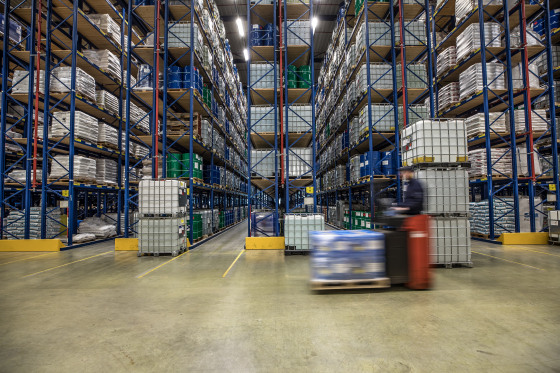
In addition, Vivochem has fully dedicated part of its warehouse in Almelo to FerSol®, with 84 conditioned pallet locations. Logistics processes have also been optimised, enabling faster and more reliable deliveries.
Can you give a concrete example where the collaboration really made a difference?
We are working with a large multinational on a project involving the heavy metal vanadium. This has been an intensive trajectory for two years, with Ferr-Tech deeply involved from a technical perspective. Recently, we welcomed this customer several times at Vivochem, including a tour of production and the FerSol® warehouse.
For them, it was important to see how processes are safeguarded and that there is a solid organisation behind the solution. That combination built confidence and supports the development of a strong customer case, also supported by the BUFA Group.

How does coordination between the teams of Vivochem and Ferr-Tech work in practice?
Very positively. After the summer, we launched a new initiative in which sales, business development and R&D work more closely together. We discuss market developments and customer questions on a weekly basis. Communication lines have become shorter, allowing us to respond more quickly to trends and changes.
Looking ahead to Q1 2026
Where does FerSol® stand at the start of the new quarter?
The market is challenging. Some sectors, such as polymer recycling, are under pressure, and we see this reflected in projects that come to a standstill due to bankruptcies. At the same time, the market is preparing for new European legislation.
For example, the use of recycled material in packaging, such as jerrycans, is becoming increasingly common and is likely to become standard. When this legislation comes into force, the market is expected to accelerate. We are already supporting customers by advising them on how to prepare and what role FerSol® can play in that transition.
What makes FerSol® distinctive compared to alternatives on the market?
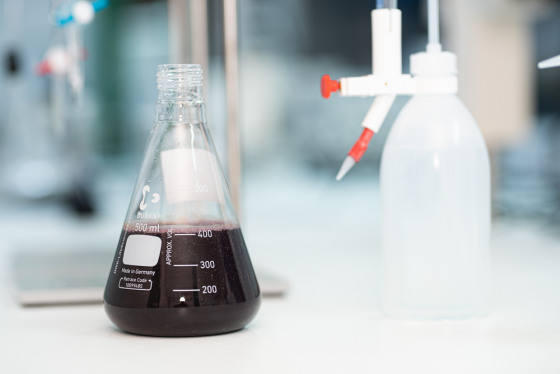
FerSol® is a green oxidant without harmful by-products for the environment. In addition, it has a triple mode of action: oxidation, cleaning and coagulation. This means FerSol® supports effective cleaning processes while also contributing to improved performance in wastewater treatment.
In practice, we often see FerSol® working well in combination with other techniques and chemicals, particularly in water treatment. That makes it broadly applicable.
What do you expect the coming quarter will bring for FerSol®?
There are many tests and pilots running across Europe. One is planned in Belgium and several in Italy, where we are active together with our Italian partner. In addition, we will be placing extra focus on crate washers together with BUFA Cleaning NL.
Do you see specific sectors or applications where opportunities lie?
The metal industry remains an important focus area. Many companies are facing discharge limits or rely on large volumes of harmful, chloride-containing chemicals. With a relatively simple addition of FerSol®, they can reduce chemical consumption and lower their CO₂ footprint. We are seeing this more and more.
Where will the team place extra focus to better support customers?
We continue to learn every day. We work increasingly closely with customers to further optimise their processes. Customers know their processes best, and we know FerSol®. That combination works well.
We also increasingly look at combinations with other techniques, such as UV, activated carbon or filtration technologies. FerSol® can do a lot, but not everything. Sometimes the solution lies in the right combination.
If you could share one message with customers who already work with FerSol® or are considering it, what would that be?
It is urgent to look at sustainable alternatives. Not only for today, but also with the future in mind. By switching to FerSol®, processes can be made more sustainable, for example by removing chlorine from the process, operating at lower temperatures and reducing the use of traditional chemicals.
In addition, FerSol® contributes to reducing water consumption and enabling water reuse. Step by step, this helps create processes that are not only more efficient, but also better aligned with future requirements around water availability and sustainability.
Over the past year, the CO₂ footprint of FerSol® has decreased from 0.46 to 0.18. This development is becoming increasingly important. By making both the product and the process more sustainable, customers move towards a lower CO₂ footprint and a future-proof process setup.
Five years ago, Ferr-Tech started with this ambition. Last year marked its five-year anniversary, and it is good to see where we stand today. The collaboration is strong, the product continues to develop and innovation remains ongoing. Ultimately, it is also about awareness. In some countries, that awareness is already more advanced, while in others it is still emerging. But the movement has started.

